Bulk Nuclease Enzyme Buying Guide
Bulk nuclease is purchased for one reason: to remove process friction caused by DNA and RNA. In real production environments, residual nucleic acids can raise viscosity, slow clarification, interfere with filtration, complicate purification, and create downstream compatibility risk. The right nuclease program reduces that burden with predictable performance, clean documentation, and reliable supply behavior.
This guide is built for procurement, process development, manufacturing, and technical sourcing teams evaluating Nuclease (DNA/RNA-Degrading Enzyme) for bulk use.

Ready to buy? Request a quote with your application, the quantity per order or per year and the delivery country. Grade, pack size, price and lead time are quoted per order. Resellers and distributors are welcome.
What nuclease does in industrial and bioprocess settings
Nuclease catalyzes the breakdown of DNA and RNA into smaller fragments. In production, that translates into practical outcomes:
- Lower residual nucleic acid load
- Reduced viscosity in cell lysates or process streams
- Improved clarification behavior
- Better filterability and lower fouling pressure
- Cleaner downstream purification conditions
- More consistent impurity control between lots
For buyers, nuclease should not be evaluated only as an enzyme. It should be evaluated as a process-control input that can protect throughput, reduce variability, and support batch release confidence.
Common bulk-use applications
Bioprocess impurity reduction
Nuclease is commonly used where host-cell DNA, RNA, or nucleic acid carryover must be reduced before downstream purification. A well-matched nuclease can simplify impurity management and help protect later unit operations.
Viscosity reduction after cell disruption
Cell lysis often releases long-chain nucleic acids that thicken the process stream. This can reduce mixing efficiency, slow pumping, and make clarification harder. Nuclease shortens these strands, helping the material handle more predictably.
Clarification and filtration support
High nucleic acid content can contribute to turbidity, membrane fouling, and inconsistent filtration performance. Nuclease treatment can improve clarification behavior before capture or polishing steps.
Research-to-production scale transition
A nuclease that works at bench scale must also fit production realities: documentation, supply continuity, packaging, storage, handling, and lot consistency. Bulk buying should account for scale-up risk early.
Key buying criteria for bulk nuclease
1. Substrate coverage: DNA, RNA, or both
Confirm whether your process needs DNA degradation, RNA degradation, or broad nucleic acid reduction. Some processes are dominated by genomic DNA viscosity; others require broader impurity reduction. Define the problem before selecting the grade.
2. Process-condition fit
Nuclease performance depends on the process environment. Before purchasing bulk material, confirm compatibility with your expected:
- pH range
- Temperature exposure
- Salt level
- Buffer composition
- Contact time
- Mixing conditions
- Hold-step design
- Presence of chelators, detergents, or inhibitors
A technically aligned supplier should help map nuclease fit to the actual process window rather than forcing a generic recommendation.
3. Downstream compatibility
The nuclease should solve a nucleic acid problem without creating a new downstream problem. Ask how the enzyme is typically managed after treatment and whether it is compatible with the purification strategy, clarification sequence, and final impurity expectations.
Important questions include:
- Will the enzyme remain active later in the process?
- Does the process include a defined inactivation or removal step?
- Could the nuclease interfere with product quality attributes?
- Are there known sensitivities with your product class?
4. Lot-to-lot consistency
Bulk buyers need repeatability. Request documentation that supports consistent production, release testing, and identity control. The goal is not just a passing lot; it is a supply program that behaves the same way when volume increases.
Look for:
- Certificate of analysis with clear release attributes
- Traceable lot numbering
- Defined storage and handling guidance
- Change-control communication
- Retain sample availability where applicable
- Stable packaging format across orders
5. Grade and documentation level
The right grade depends on use case. A technical process aid may not need the same document package as a material intended for tightly controlled bioprocess environments. Before requesting pricing, define the level of documentation your quality team expects.
Possible documentation considerations include:
- Origin and manufacturing statement
- Allergen or animal-origin position, if relevant
- Microbial quality expectations
- Residual impurity profile expectations
- Regulatory support files, where applicable
- Statement of intended industrial or bioprocess use
Bulk format and packaging considerations
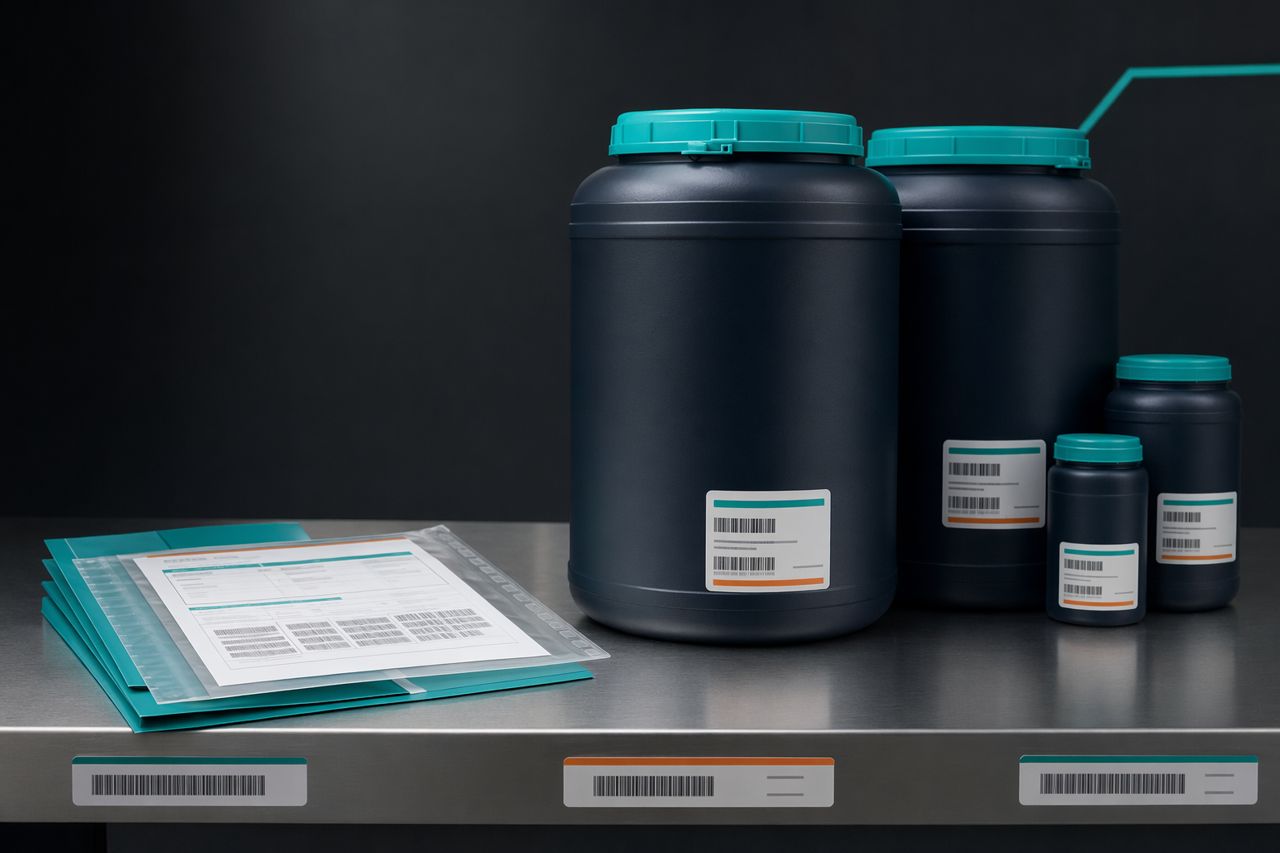
A nuclease can perform well technically but still create operational friction if the format does not fit your plant. Packaging should support clean handling, controlled thaw or reconstitution where applicable, and practical dispensing.
Before buying, confirm:
- Liquid or powder preference
- Container size and closure type
- Cold-chain requirements
- Shelf-life expectation
- Freeze-thaw sensitivity, if relevant
- Minimum order quantity
- Lead time and reorder cadence
- Batch reservation options for campaigns
For recurring production, ask whether a supplier can support lot reservation or scheduled deliveries. This can reduce qualification churn and help maintain continuity across campaigns.
How to brief suppliers for accurate pricing
Nuclease pricing depends on format, grade, documentation, packaging, and volume. To get a useful quote, provide enough process context without disclosing sensitive process details.
Include:
- Target application and process step
- DNA, RNA, or broad nucleic acid reduction requirement
- Approximate annual volume
- Desired packaging format
- Expected storage condition
- Required documentation package
- Target delivery region
- Timing for evaluation and scale-up
Avoid vague requests such as “send price for nuclease.” A stronger brief produces faster technical alignment and fewer quote revisions.
Evaluation plan before bulk commitment
A practical nuclease evaluation should test operational outcomes, not just enzyme presence. Build a short internal plan around measurable process behavior.
Evaluate:
- Reduction in nucleic-acid-driven viscosity
- Clarification improvement
- Filter loading behavior
- Compatibility with the next purification step
- Product quality impact
- Hold-step robustness
- Handling ease in your facility
- Lot-to-lot comparison when possible
If the enzyme will be used in a controlled manufacturing process, involve quality, manufacturing, and procurement before the final bulk purchase.
Red flags when sourcing nuclease
Be cautious if a supplier cannot clearly answer basic technical and supply questions.
Watch for:
- Unclear enzyme identity or source
- Inconsistent documentation between lots
- No defined storage guidance
- No change-control communication path
- Packaging that changes without notice
- Long or unpredictable lead times
- Poor technical fit with your process conditions
- Pricing that excludes required documentation or cold-chain handling
Low purchase price can become expensive if the enzyme causes rework, repeat qualification, filtration issues, or batch uncertainty.
Recommended procurement checklist
Use this checklist before placing a bulk nuclease order:
- Define DNA, RNA, or broad nucleic acid reduction target
- Confirm process-condition compatibility
- Confirm downstream removal or inactivation strategy
- Select grade and documentation level
- Review storage and handling requirements
- Confirm packaging format and campaign volume
- Request lead time and supply continuity options
- Align internal quality and manufacturing stakeholders
- Run a controlled evaluation before bulk scale-up
- Secure written specifications for recurring supply
Why buyers choose nuclease support
Nuclease Enzyme Solutions sells nuclease in bulk to manufacturers and resellers. We match the grade to your process, quote per order, and tell you which documents are available for that grade.
Resellers and distributors: tell us your market and the pack size your customers buy.
Request nuclease pricing
Send your application, the quantity per order or per year, your pack preference and the delivery country. We reply with the grade and a price for your quantity.
Need help defining the right grade or package? Use the same form and ask for technical alignment before pricing.