Nuclease built around process outcomes
Nuclease is a DNA/RNA-degrading enzyme used when residual nucleic acids become a process problem: high viscosity, slow clarification, filter burden, haze, extraction interference, or downstream variability. Strandfall frames nuclease selection in operational terms so procurement, process development, quality, and manufacturing teams can align on what matters before qualification begins.
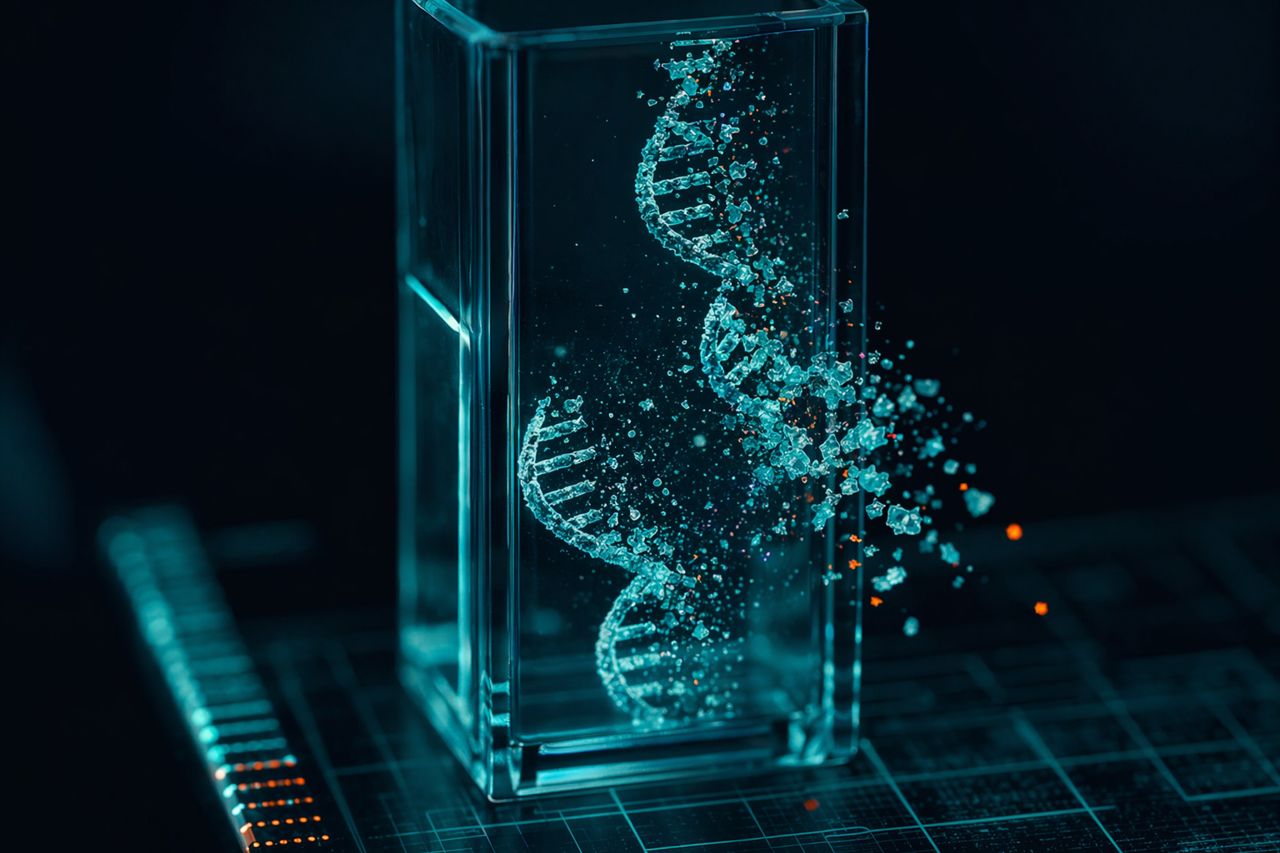
The goal is controlled strand reduction. In the right process window, nuclease fragments DNA and RNA into smaller nucleic acid pieces, helping reduce lysate drag, improve flow behavior, support separation steps, and lower nucleic-acid-driven interference in later operations.
What nuclease helps improve
- Residual DNA/RNA reduction: supports processes where nucleic acid carryover affects specification strategy, product purity, or analytical confidence.
- Lower lysate viscosity: helps make disrupted biomass, cell lysates, and nucleic-acid-rich intermediates easier to mix, transfer, clarify, or filter.
- Cleaner downstream behavior: can reduce nucleic-acid-related fouling, binding interference, phase drag, or turbidity in downstream workflows.
- Process clarity: supports more predictable hold steps, clarification profiles, and impurity management.
- Lot-to-lot confidence: procurement discussions can focus on grade, documentation, packaging, and consistency rather than vague enzyme labels.
Common industrial and bioprocess uses
Recombinant protein processing
Nuclease is often introduced after cell disruption to reduce nucleic acid viscosity and improve clarification readiness before capture or polishing operations. It can be especially useful when dense biomass, difficult lysis conditions, or high nucleic acid release creates inconsistent handling.
Viral vector and cell therapy support workflows
Where residual host-cell nucleic acids must be managed carefully, nuclease can support impurity reduction strategies. Selection should account for product sensitivity, process timing, matrix composition, and downstream removal expectations.
Diagnostic reagent and molecular manufacturing
Nuclease can be used to manage unwanted DNA or RNA in reagent preparation, raw material treatment, or intermediate cleanup where nucleic acid background affects performance.
Fermentation and industrial biotechnology
In microbial or cell-derived production streams, nuclease can help reduce rheology challenges after disruption and improve the physical behavior of nucleic-acid-rich process material.
Selection factors that matter before pricing
A nuclease quote should not start with a generic SKU conversation. It should start with the process environment.
Matrix and operating window
Important inputs include pH range, temperature exposure, salt profile, metal ion availability, surfactants, denaturants, protease load, product sensitivity, contact time, and intended point of addition. These factors shape whether nuclease treatment will be efficient, compatible, and practical for scale-up.
Grade and documentation
For B2B procurement, enzyme grade is only part of the decision. Buyers often need lot documentation, origin statements, change-control expectations, impurity considerations, packaging format, storage profile, and supply continuity planning.
Downstream compatibility
Nuclease treatment should be evaluated against the full process train. Consider how fragments, cofactors, salts, or residual proteinaceous material may interact with clarification, chromatography, filtration, extraction, precipitation, or final analytical methods.
Qualification path
A controlled qualification plan typically compares untreated material, nuclease-treated material, and downstream outputs. Useful observations include viscosity behavior, turbidity, filter performance, recovery, impurity trend, and residual nucleic acid outcome.
Procurement-ready questions
Use these questions when preparing a nuclease inquiry:
- What material is being treated: lysate, supernatant, extract, buffer, reagent intermediate, or another matrix?
- Is the primary problem viscosity, residual DNA, residual RNA, haze, filtration load, analytical background, or downstream interference?
- Where will nuclease be added in the process?
- What conditions are fixed, and what conditions can be adjusted?
- Are there product sensitivity concerns or removal requirements?
- What documentation is required for purchasing, QA review, and internal qualification?
- What packaging format and recurring supply cadence are preferred?
Why Strandfall
Strandfall is built for buyers who need clear enzyme conversations without academic detours. We translate nuclease performance into manufacturing language: what the enzyme is expected to change, what conditions influence that change, what documentation must travel with supply, and what risks should be reviewed before scale.
Strandfall supports teams with
- Process-context review before quote preparation
- Grade and documentation alignment
- Sample and qualification planning discussions
- Packaging and supply continuity coordination
- Clear technical language for procurement and QA stakeholders
Request a quote or get pricing
Share your process context and target outcome. A Strandfall representative will review the request and respond through the site’s own inquiry workflow.